
I lost the sentence again this morning — not the words, the shape of where it was going — somewhere between reading one Slack message and coming back to my own half-built paragraph.
You know this if you've done any work that requires holding an idea in your head. You're three-quarters of the way through a thought. Something pings. You check it — just checking — and it's nothing, thirty seconds, you turn back. And the on-ramp is gone. You re-read your last line once, twice, a third time, trying to remember where the sentence was heading before it evaporated. The thirty-second interruption is over. The cost has just started.
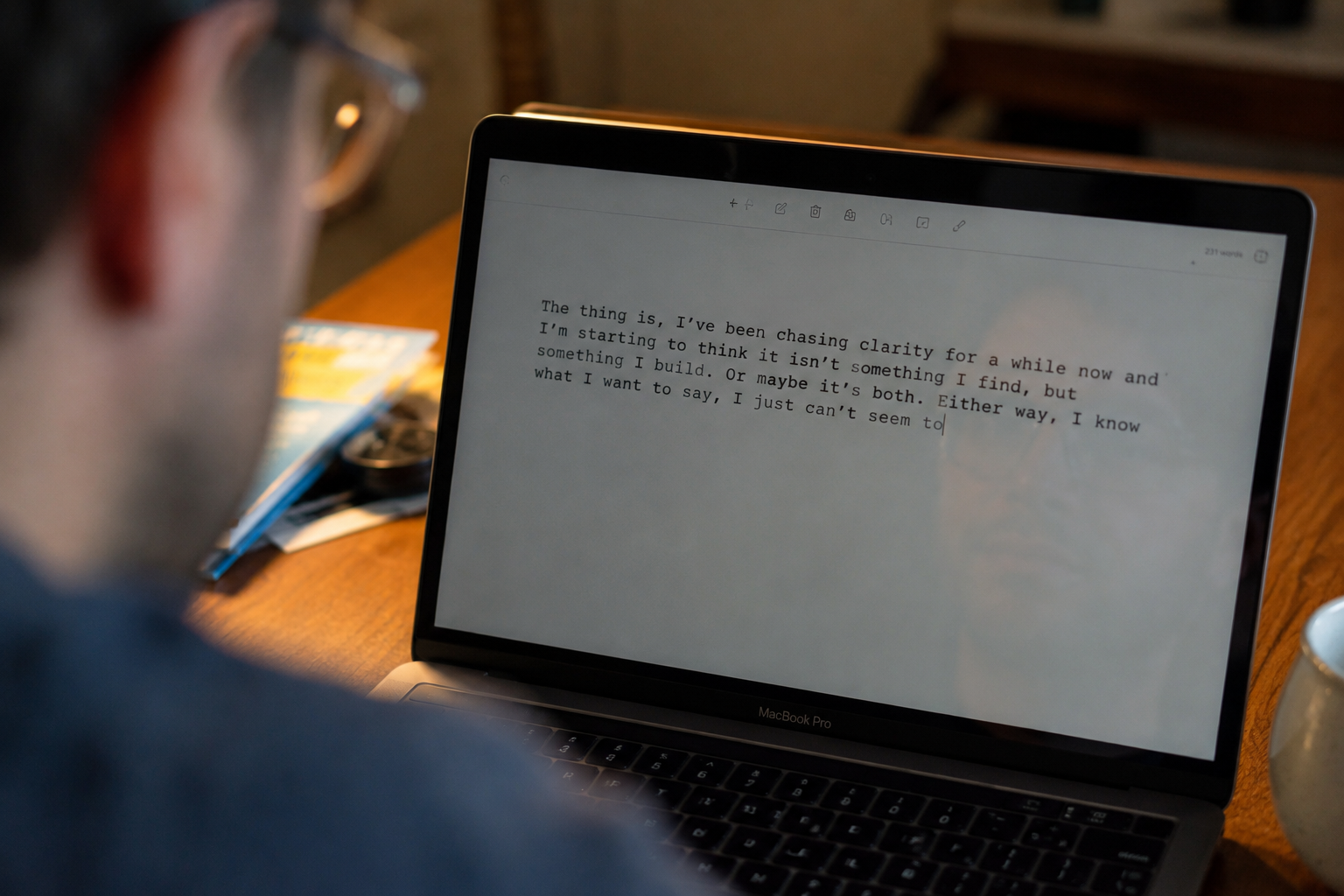
The lie is in the phrase. "Just checking one thing" pretends the price is the length of the check. It never is. I have never once just checked. I checked, and then worked for the next stretch with part of me still back in the message — drafting the reply I hadn't sent, half-wondering about the thing I'd seen. The other tab was closed on my screen and still running in the back of my head.
"The other tab was closed on my screen and still running in the back of my head."
Attention Residue
There's research under this, and it matches the feeling exactly. A psychologist named Sophie Leroy gave it a name in 2009: attention residue — the bit of your mind that stays on the last task when you move to the next one. Her most pointed finding is the one I feel most: the residue is worse when the thing you left was unfinished. Which is the whole problem with "just checking," because checking almost never finishes anything. You leave the loop open, and the open loop is what follows you back to your desk.
Here's the texture of it, the part that's hard to notice because it isn't dramatic. Residue doesn't feel like losing your mind. It feels like a low hum. You're working — the document is open, your hands are on the keys — but a slice of your attention is somewhere else, and the work you're doing is quietly thinner for it. You don't catch it happening. You just notice, an hour later, that the morning produced less than it should have and you couldn't say where it went.

I'm not going to tell you to turn off every notification and disappear into a focus cabin. I don't, and I can't. My work runs through those channels; so does a chunk of my life. Some interruptions are not distractions — they're a colleague with a real question, a message that actually matters, a person who needs something. The goal was never a sealed room. The goal is to stop adding self-inflicted residue on top of the unavoidable kind.
Finish the Sentence
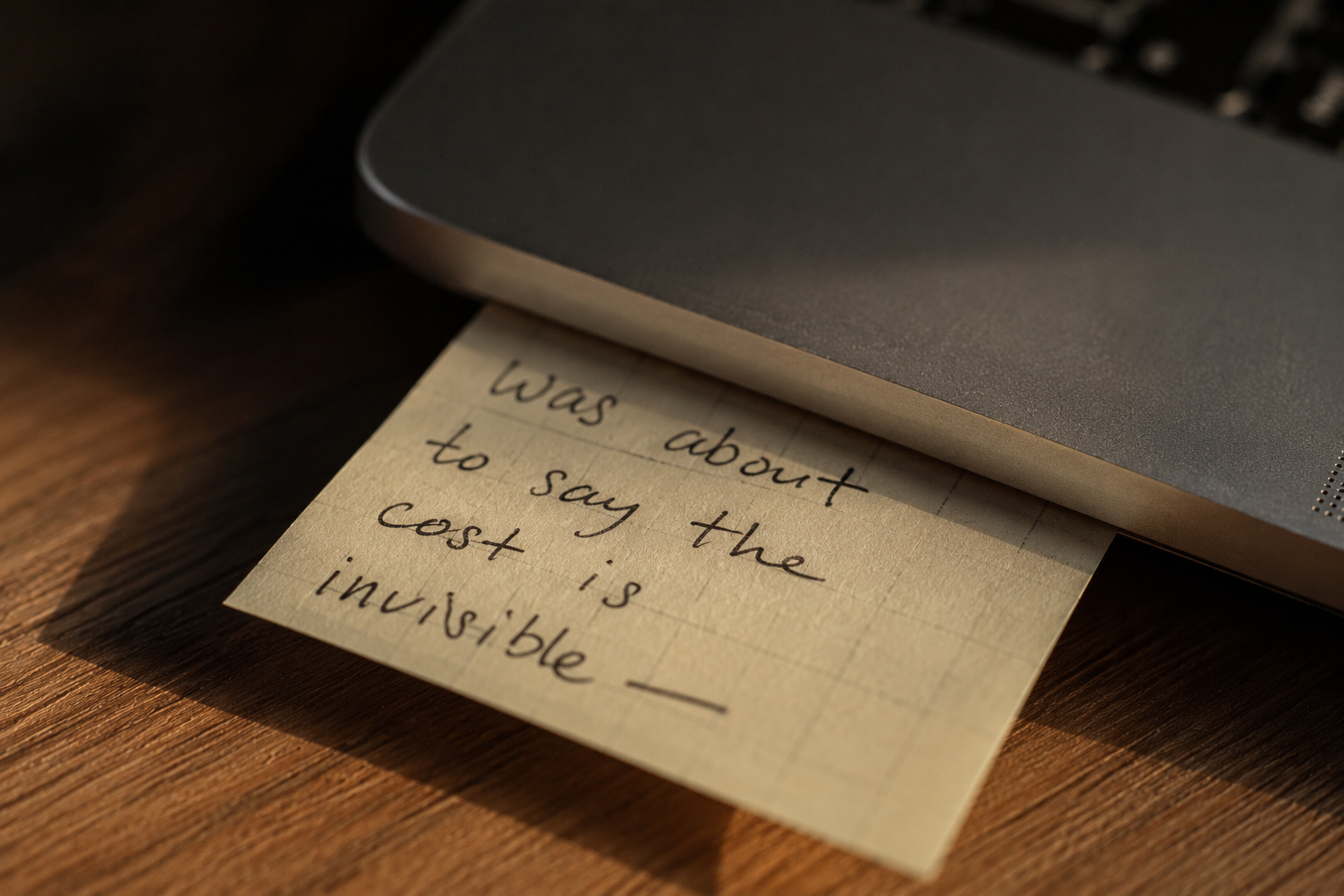
The one thing that reliably helps me is smaller than it sounds: I finish the smallest complete unit before I switch. Not the whole paragraph — the sentence. I get to a real stopping point, even a tiny one, so there's less left hanging when I go. Sometimes I leave myself a half-line — "was about to say the cost is invisible" — so future-me has an on-ramp back. It doesn't clear the residue. Nothing I've tried clears it completely. It just leaves less behind to trip on.
In voliflow, use the session notes field to drop a half-line before you switch — "was about to say X" — so there's an on-ramp waiting when you return. It takes five seconds and leaves the loop less open.
"I've stopped believing the version of me who says 'just checking.' She genuinely thinks the cost is the thirty seconds. It isn't."
And I've stopped believing the version of me who says "just checking." That person is not lying on purpose. She just genuinely thinks the cost is the thirty seconds. It isn't. It's the next twenty minutes she won't think to count, the sentence she'll lose, the hum she'll work through without noticing.
I closed the tab an hour ago. I only just got the sentence back.