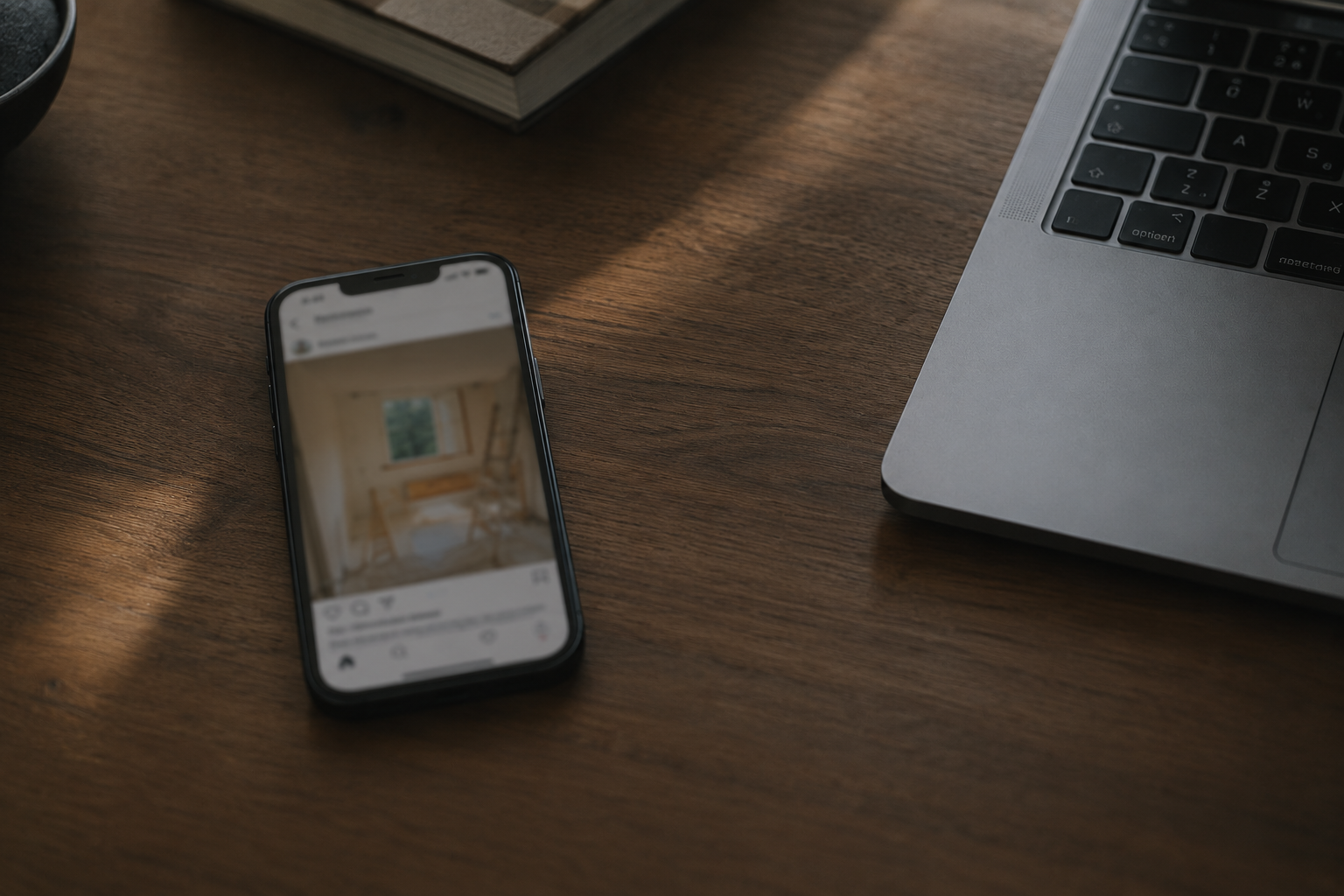
At 2:52 I looked up and I had been, with total commitment, reading about a stranger's kitchen extension in a town I will never visit.
I know it was 2:52 because the app told me afterward, the way it always does, with the gentle cruelty of a friend showing you a photo you didn't know was taken. I had sat down at 2:10 to write a section of something due Thursday. Forty-two minutes. The phone itself accounts for maybe nine of them. I want to be precise about that, because the nine minutes are not the interesting part, and they're not where the afternoon actually went.
Here is what happened in the other thirty-three.

Somewhere around 2:19 I reached for the phone without deciding to. There wasn't a craving. There wasn't even a thought I could later point to and say: that, that's the one that pulled me. There was a sentence I didn't know how to finish, a small flinch of not-knowing, and my hand was already moving. The kitchen extension was not interesting. I need to be clear about this too. It was not a guilty pleasure. It was just there, and easier than the sentence.
I put the phone down at roughly 2:28. And then I did not go back to work. That's the part nobody tells you about. The document was open the whole time. The cursor was where I'd left it. And I sat in front of it for another eleven or twelve minutes, reading the same half-paragraph, feeling vaguely that I was working, while some quiet part of my head was still three rooms away, still mildly wondering whether they went with the matte tiles.
Attention Residue
There's a name for that part of your head. A researcher called Sophie Leroy at the University of Washington called it attention residue — the bit of you that stays behind on the last thing when you try to move to the next thing. She found, fairly bluntly, that people who switch tasks before the first one feels finished carry a kind of cognitive smear into the second task, and they perform worse, and they usually don't notice they're performing worse. That last part is the one that gets me. The cost is invisible from the inside. It doesn't feel like damage. It feels like a slightly foggy afternoon.
"The scroll was nine minutes. The residue was the rest."
I should tell you that I do this for a living, in a sense. I write about focus. I have the tracker. I have, on my shelf, the books. And I lost Tuesday afternoon to a kitchen I will never stand in, and I would lose it again next week if I'm not careful, and some weeks I'm not careful. I'm telling you this because the genre this article belongs to usually pretends otherwise — usually there's a writer who has solved it, who fasted from dopamine and emerged clear-eyed. I haven't solved it. I've just stopped lying to myself about where the time goes.

Because "wasted time scrolling" was never quite the right description of the problem. The waste implies the time was spent on the phone. But I've measured it now, more than once, and the phone is rarely more than a fifth of it. The rest is the recovery — the long, dim corridor between putting the phone down and actually arriving back at the work.
"You don't get charged for the glance. You get charged for the return trip."
The Four-Second Breadcrumb
What I've found genuinely helps is small, and I almost don't want to write it down, because it sounds like the kind of tip these articles always end on. But it's the only thing that's moved the number for me, so here it is.
Before I look away — when I feel the hand start to move — I write down the sentence I was about to write. Not the work. Just one line about where I was: "next bit is the part about the cost being invisible." A breadcrumb. It takes four seconds. And it turns out Leroy's own follow-up research found roughly this: that making a quick, concrete plan for how you'll pick the task back up lets your attention actually let go of it. The residue needs somewhere to land. If you give it a note, it stops clinging to you.
In voliflow, use the session notes field to drop a one-line breadcrumb before you look away — "next bit is X." It takes four seconds and gives your attention somewhere to land when you come back, shortening the foggy corridor between the distraction and the work.
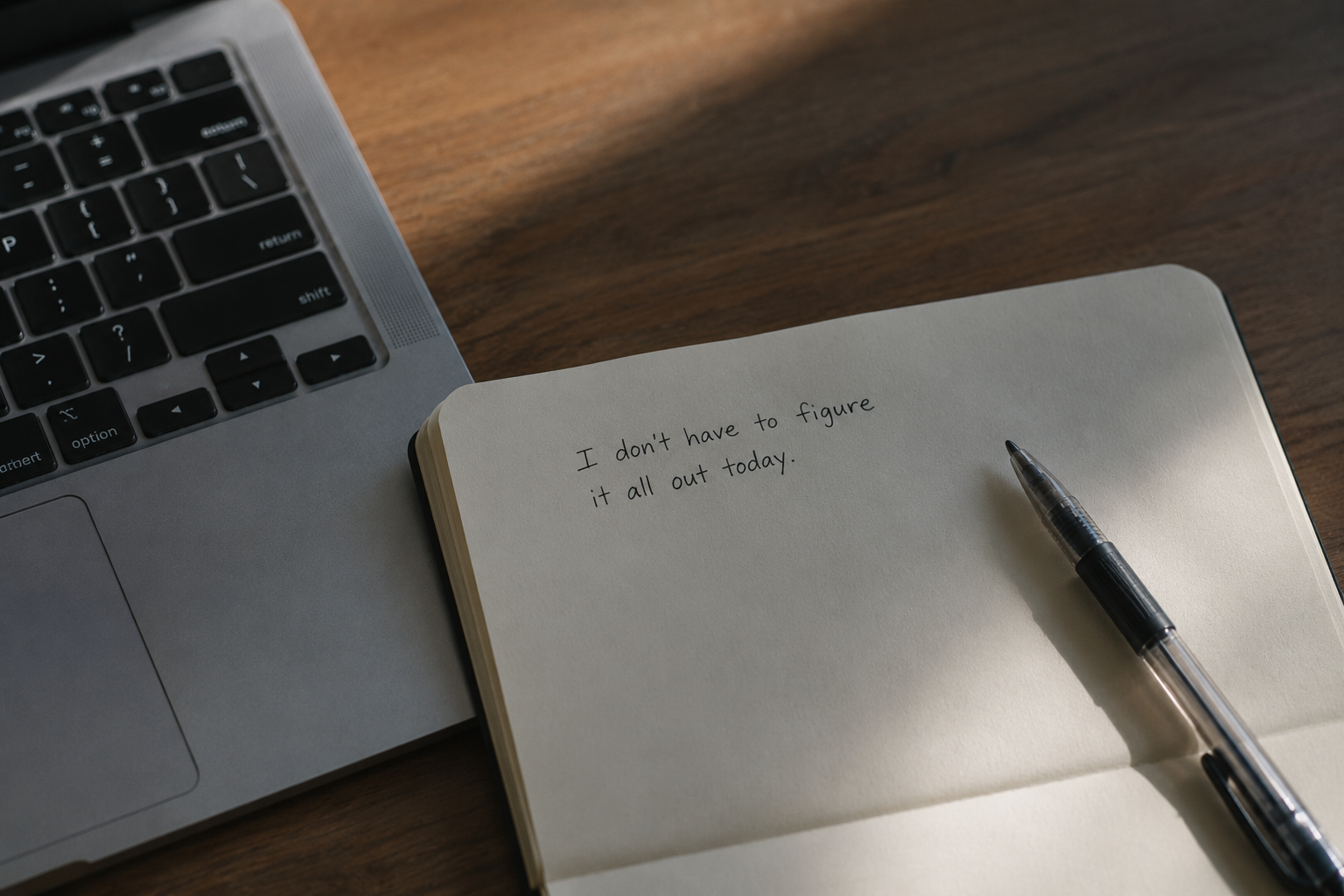
It doesn't stop me reaching for the phone. Nothing has stopped that. What it does is shorten the corridor on the way back — the eleven foggy minutes become three. Over an afternoon, that's most of the afternoon.
I looked up at 2:52. On a good week, now, I'd have looked up at 2:38, with a note waiting for me telling me exactly where to stand. The kitchen would still have happened. I've made my peace with the kitchen. It's the corridor I'm trying to get back.